News
CERT Volunteer Program Announcement
Southern Nevada CERT is launching its new Volunteer Program: Southern Nevada CERT 3V.
This unique program aims to vitalize the invaluable, basic disaster response skills that CERT members have already learned. As a CERT 3V, members will take an active role in educating and supporting people in neighborhoods, schools, places of worship, and other existing organizations to take a more active role in emergency preparedness.
They may also receive additional training to give critical emergency support to first responders and other agencies when needed. As an affiliated, trained volunteer with the Southern Nevada CERT 3V Program, members will be a trusted source of support to Southern Nevada response agencies. For additional information, please contact: Irene Cedillo icedillo@lasvegasnevada.gov or 702-229-2608.
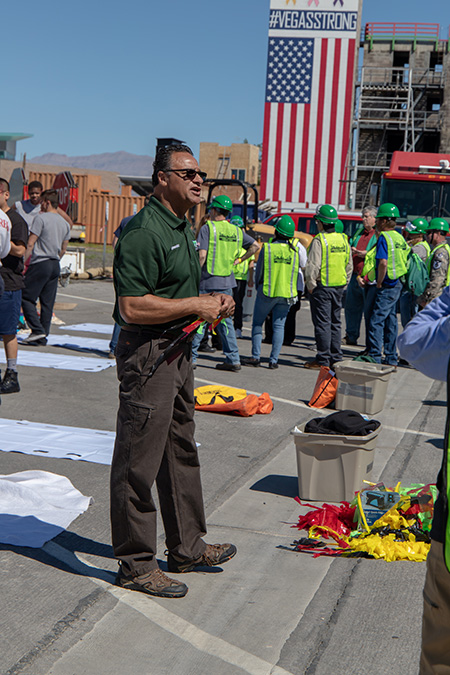
2022 Southern Nevada CERT Exercise Held
The 2022 Southern Nevada Community Emergency Response Team(CERT) exercise is in the books. More than 30 CERT volunteers took part in theday-long event, which included refresher training, a tabletop discussionexercise, and a full-scale exercise.
The event took place at the Las Vegas Fireand Rescue Training Center. This was the first time since 2019 that afull-scale CERT exercise occurred. During the morning refresher, CERTvolunteers received training on fire suppression and emergency first aid.Afterward, the volunteers were broken into groups, where they analyzed anemergency scenario in a discussion setting.
Following a lunch provided byFirehouse Subs, the volunteers were briefed on the full-scale exercisescenario: a magnitude 5.5 earthquake near Frenchman Mountain. The volunteersdispatched to the Fire Training Center exercise field, where they reported toan Incident Commander and encountered damaged buildings, fires, and actorsdressed as victims. Many of the volunteers say they appreciated the opportunityto test their skills. KSNV Channel 3 and KCLV Channel 2 provided media coverageof the event. Watch the Channel 3 report here,and the KCLV report here.
SouthernNevada CERT Program Public Information Officer Guy DeMarco says the exercise isa huge benefit to all involved. “It gives our volunteers the practice theyneed, and it gives our first responders the chance to work with ourvolunteers,” he said. “It’s a win-win for everyone.” Thanks to all who madethis year’s exercise a success!
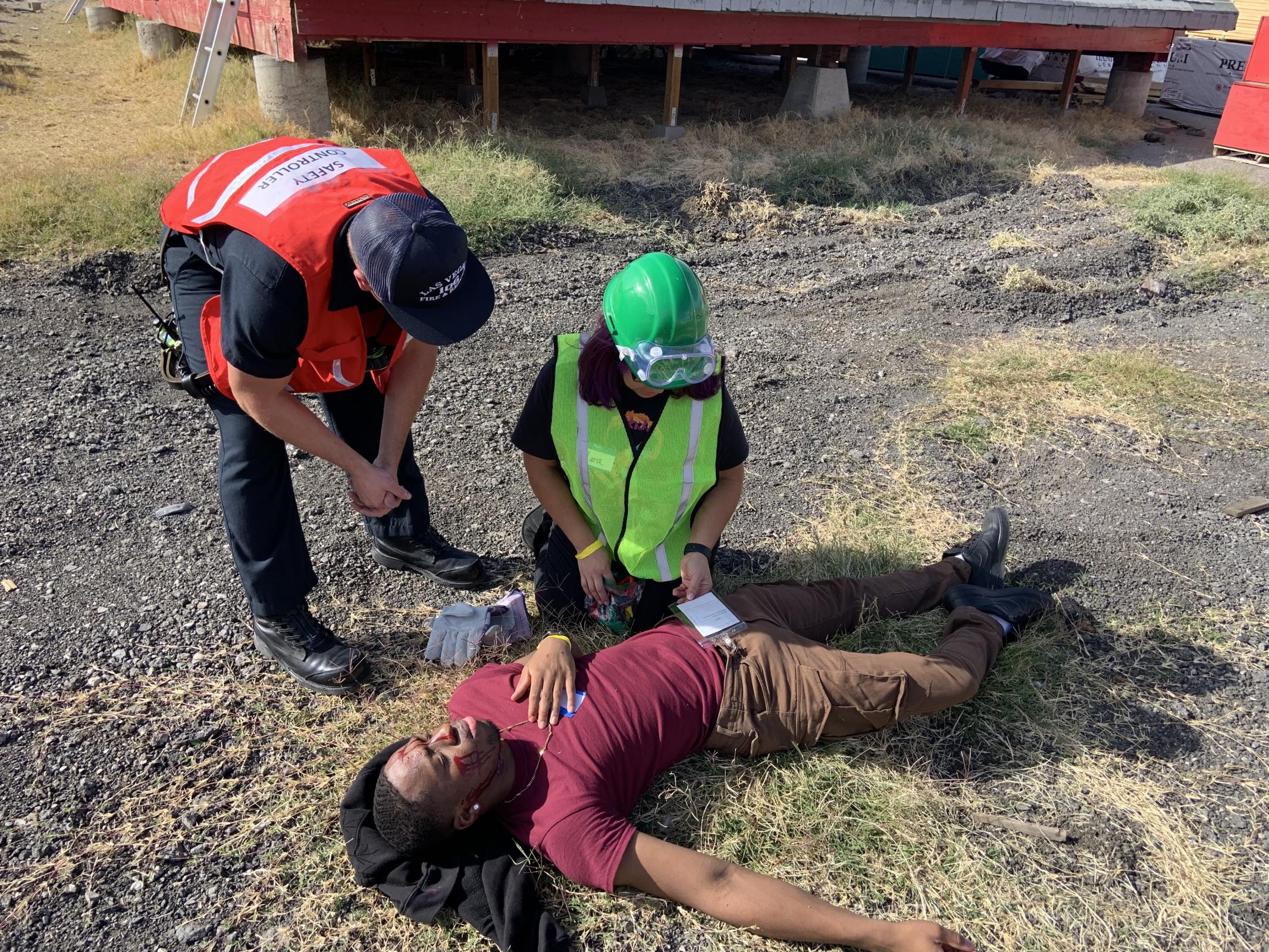
CERT Course for Southern Nevada Asian Community Held
The Southern Nevada CERT program continues to expand to serve different segments of the local population. Organizers held the first Southern Nevada Asian CERT course in March.
The course took place at the City of Las Vegas Emergency Operations Center. While the curriculum was the same as the one offered in other CERT courses, there were materials available for Chinese-speaking students, as well as a Chinese interpreter.
“We have had great success with our Spanish CERT courses for the last few years,” said Southern Nevada CERT Program Manager Mary Camin. “It only makes sense that we should expand to other segments of our community.”
CERT instructor Cherina Kleven helped make the Asian CERT course a reality. “As our cities continue to grow demographically, it is important to make sure our citizens are safe and know what to do during disaster or emergency situations,” she said. “We look forward to expanding our services to our community.”
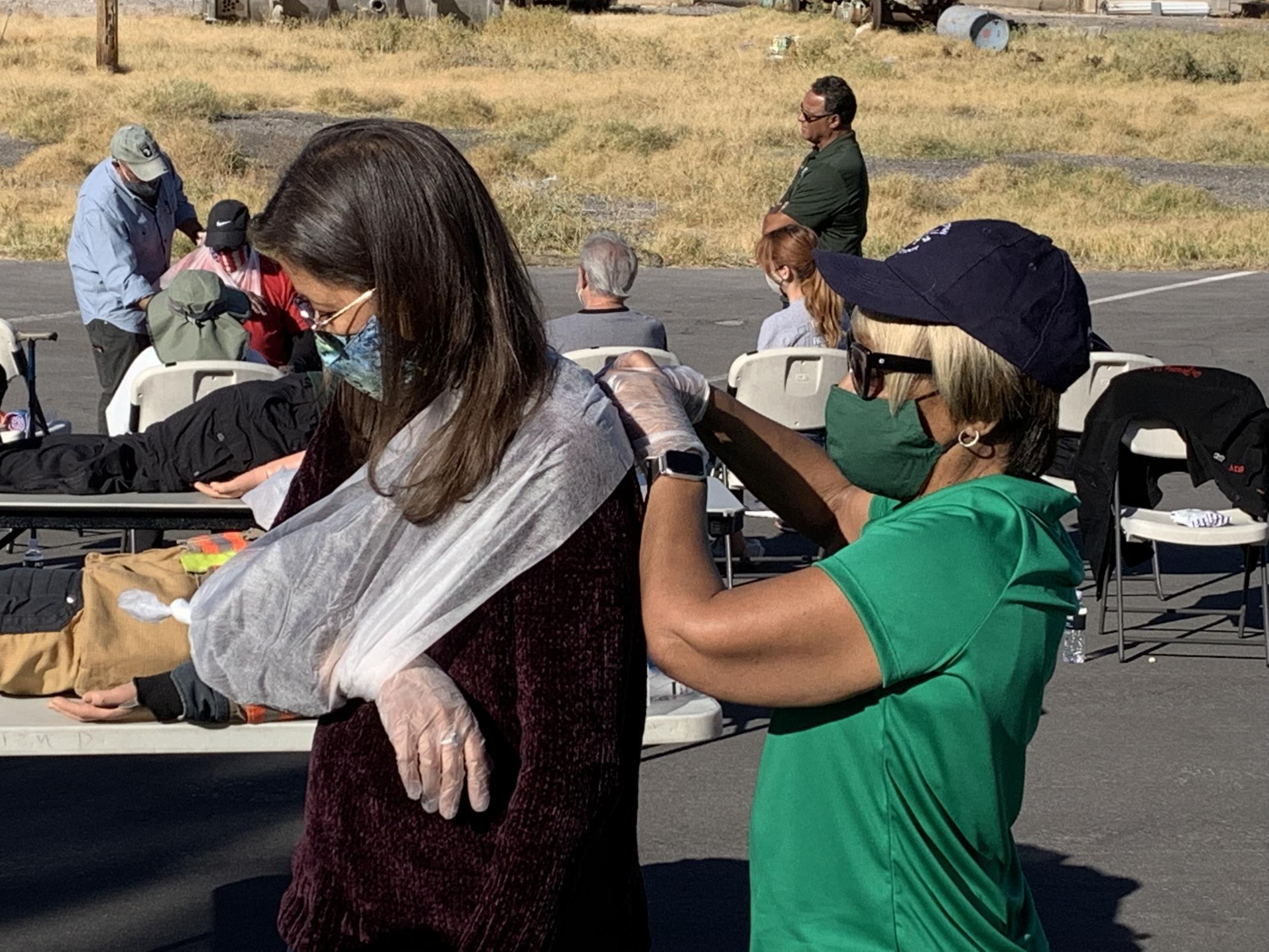
2021 Southern Nevada CERT Exercise Held
The 2021 Southern Nevada CERT exercise took place Saturday, November 6, 2021. More than 30 CERT volunteers participated in the exercise, which usually takes place every year.
Due to the COVID-19 pandemic, however, the CERT program did not hold an exercise in 2020. The exercise was divided into two parts: a training refresher and a tabletop discussion. During the refresher, CERT volunteers received additional training on disaster medical operations. Afterward, the volunteers practiced what they learned on moulaged volunteers from the EMS Training Center.
Following a working lunch, the CERT volunteers divided into small groups, where they participated in tabletop discussions. Specifically, each group received a scenario involving an earthquake in a Las Vegas valley neighborhood. From there, the groups discussed how they, as CERT volunteers, would respond following the earthquake.
Many of the volunteers said they enjoyed the ability to practice their CERT skills and think through a potential disaster situation in Las Vegas.
Thanks to all who participated.
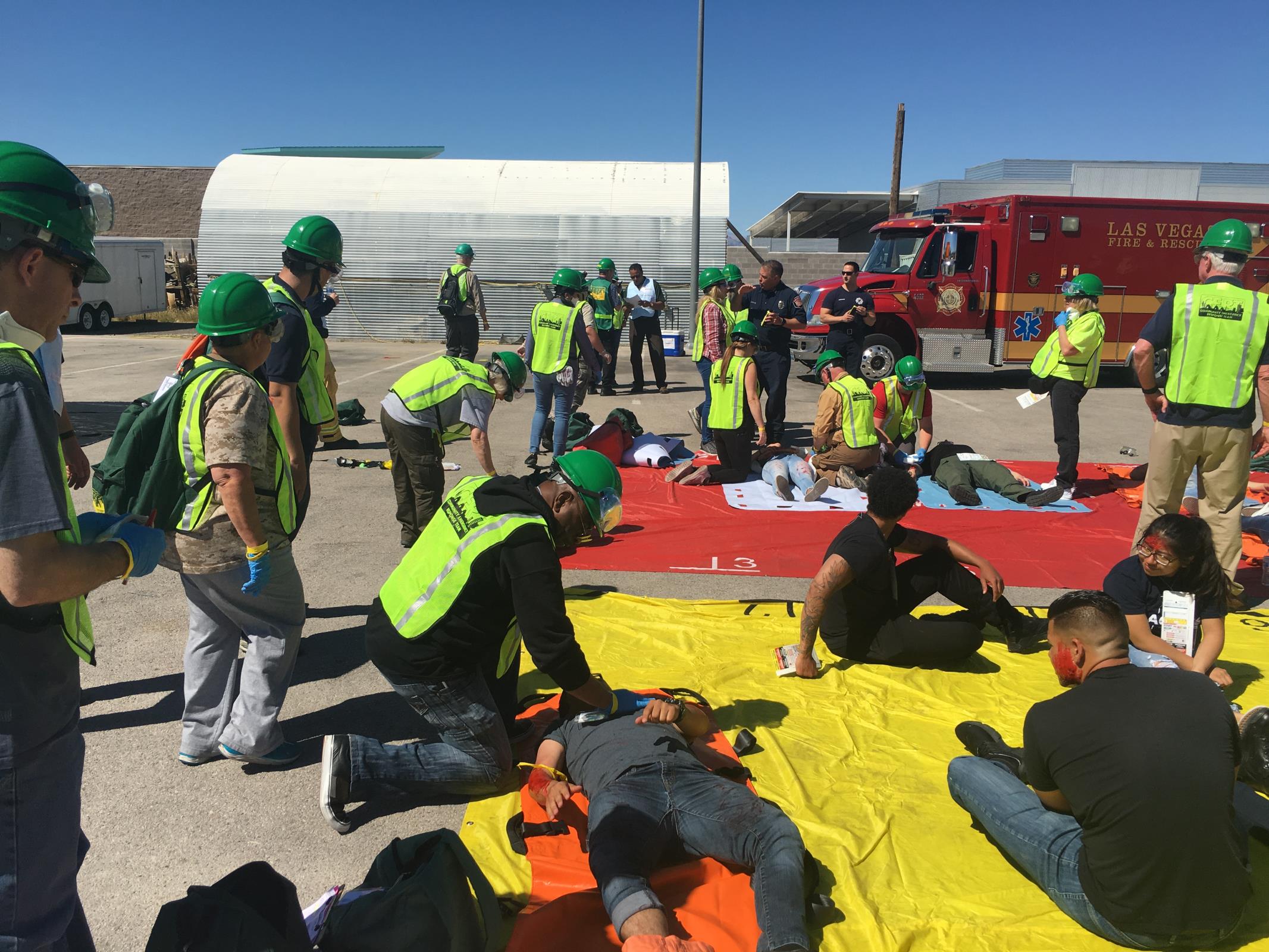
Second Annual CERT Exercise Held
Nearly 50 CERT volunteers had the opportunity to practice their life-saving skills on April 13th at the second annual Community Emergency Response Team (CERT) exercise. The day-long event took place at the Las Vegas Fire and Rescue Training Center.
The volunteers began the day with a refresher CERT course that focused on fire suppression, medical operations and the Incident Command System.
After lunch, the exercise began with a mock news report by KCLV of an earthquake under Frenchman Mountain. The volunteers dispatched to the Incident Command Post, where they were organized into teams for search and rescue; medical operations and fire suppression. Once sent into the field of play, the teams encountered “damaged” buildings, fires and more than 70 actors who portrayed injured victims (with realistic-looking injuries). The exercise lasted approximately two hours.
“Our volunteers deserve the utmost credit,” said Southern Nevada CERT Program Specialist Mary Camin. “Their commitment, effort, and dedication are what make the Southern Nevada CERT program and this exercise possible.”
Thanks to all of the players; as well as the volunteers provided by Las Vegas Fire & Rescue, the city of Las Vegas Marshal’s Office, the American Red Cross of Southern Nevada, UNLV, EMS Training Center of Southern Nevada and Las Vegas Metropolitan Police Department.
Special thanks to Las Vegas Fire and Rescue Battalion Chief Gary Suan for providing access to the Fire Training Center, as well as to Firehouse Subs for providing food to everyone involved.
CERT Instructor Honored for 1 October Efforts
The Oct. 1, 2017 shooting at the Route 91 Harvest Festival in Las Vegas ended the lives of 58 people; hundreds more were injured. Some of the more than 20,000 concert-goers, however, survived thanks to the quick actions of people who attended the event.
One of those heroes is Southern Nevada CERT instructor Fernandez Leary.
Leary was attending the concert with family and friends. When the shooting started, his experience as a former fire chief and paramedic took over. Leary helped administer first aid to many people who sustained injuries from the shooting.
Now, Fernandez Leary is being recognized for his efforts. The American Red Cross of Southern Nevada named Fernandez Leary as one of the organization's 2018 Everyday Heroes. The annual awards are presented by the American Red Cross of Southern Nevada and Caesar's Entertainment, with support from KLAS-TV, Channel 8.
Thanks to Fernandez Leary for his life-saving actions at the Route 91 Harvest Festival, and thanks to the American Red Cross of Southern Nevada for giving him this much-deserved honor.
Watch the American Red Cross of Southern Nevada Everyday Heroes Awards Banquet
Watch 8 News NOW's Story about Fernandez Leary